Chakras: Energy Centers in Ancient Meditation Practices
Sanskrit: चक्र (chakra), Pali: cakka — meaning “wheel” or “circle” — refers to various focal points used in ancient meditation practices, particularly within the esoteric or inner traditions of Hinduism and Buddhism, collectively known as Tantra.
Beliefs about chakras vary across Indian religions. Many Buddhist texts mention four chakras, while Hindu sources commonly refer to seven. Early Sanskrit texts describe chakras both as meditative visualizations combining flowers and mantras, and as subtle energy centers within the body.
In Kundalini Yoga, practices such as breathing techniques (pranayama), visualizations, mudras, bandhas, kriyas, and mantras are used to manipulate the flow of subtle energy through these chakras.
The Seven Major Chakras in Hindu Tradition
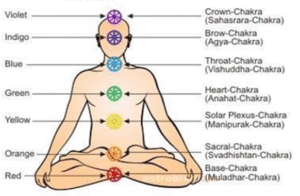
Each of these seven major chakras (four in Buddhism) is associated with a specific color, shape, sense organ, natural element, deity, and mantra (monosyllabic prayer formula). They are:
Crown Chakra (Sahasrara): Top of the head.
Third Eye Chakra (Ajna): Between the eyebrows.
Throat Chakra (Vishuddha): Throat.
Heart Chakra (Anahata): Center of the chest.
Solar Plexus Chakra (Manipura): Upper abdomen.
Sacral Chakra (Svadhisthana): Just below the navel.
Root Chakra (Muladhara): Base of the spine.
Temples Aligned with Chakras: The Six Sastha Temples
In South India, a unique spiritual tradition links six Sastha temples to the six lower chakras. These temples are believed to activate specific chakras when visited in a sequential order, starting from Sori Muthaiyan Kovil and ending with Sabarimala. This pilgrimage is believed to stimulate a specific chakra in the subtle body (Sukshma sharira) with each visit. Once all the chakras are activated, the ultimate state of Sahasara (Crown Chakra) is achieved, leading to Self-Realization (Atma Darshan) or Moksha (liberation).
Temple Associated Chakra
Sori Muthaiyan Kovil (TN) Muladhara (Root)
Achankovil (Kerala) Svadhisthana (Sacral)
Aryankavu (Kerala) Manipura (Solar Plexus)
Kulathupuzhai (Kerala) Anahata (Heart)
Erumeli (Kerala) Vishuddha (Throat)
Sabarimala (Kerala) Ajna (Third Eye)
Who is Shasta?
Shasta is a Hindu deity of Dravidian origin, often associated with both Shiva and Vishnu. In mythology, Shasta is another name for Ayyappan, the divine offspring of Shiva and Mohini (a form of Vishnu). He is worshipped as Ayyanar in Tamil Nadu and Ayyappan in Kerala.
Chakra Activation and Balance
Chakras can be activated through various ancient Yogic practices, including:
– Meditation
– Chanting mantras
– Yogic breathing (pranayama)
– Using certain Ayurvedic herbs
– Physical exercises like yoga asanas (postures)
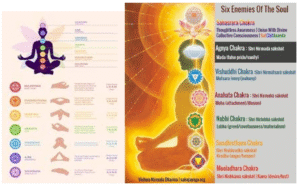
Signs of Blocked Chakras
When chakras are blocked, energy flow is interrupted, potentially leading to mental, physical, and spiritual disturbances. Signs may include:
Physical symptoms: Headaches, blurred vision, sinus issues, eyestrain, seizures, hearing loss, hormonal dysfunction.
Emotional symptoms: Mood swings, fear, lack of self-awareness, and difficulty learning from experiences.
What Happens When All Chakras Are Aligned?
When chakras are balanced, aligned, and unblocked, energy flows freely through them, harmonizing the body, mind, and spirit. This free flow of energy promotes well-being and prevents discord.
Chakras and Planetary Connections
Each of the seven chakras is traditionally associated with one of the seven visible planets in our solar system, aligning cosmic energy with the human energy system. Each chakra is believed to be tuned to the energy and movement of a particular celestial body.
Dr. Suresh Khanna


